


How demographic trends, breakthrough drug development and intellectual property continue to create value for investors
Markets remain focused on the economic implications of geopolitical tensions in the Middle East, persistent inflation concerns and rising long-term interest rates. The U.S. Treasury 30-year bond yield recently moved above 5%, reducing expectations for near-term interest rate cuts and reminding investors that inflation remains a challenge despite signs of economic moderation.
These developments may influence market sentiment in the months ahead. However, they do little to alter several of the long-term forces shaping the global economy. Among the most durable of those trends is the growing demand for health care.
An aging population, rising rates of chronic disease and steady advances in medical research continue to increase demand for new therapies. The companies that successfully bring those therapies to market can create substantial value through patent protection, pricing power and years of recurring revenue. For that reason, pharmaceuticals remain an important area of focus within our portfolios.
The opportunity extends beyond any single company or therapy. Demographic trends continue to support demand for treatments addressing cancer, cardiovascular disease, diabetes, obesity and a growing range of age-related health conditions.
Demand Is Not Cyclical
Many industries experience periods of expansion and contraction as economic conditions change. Health care is different.
Across North America and Europe, populations continue to age. Longer life expectancy has increased demand for treatments addressing cancer, cardiovascular disease, diabetes, obesity and other chronic conditions. These trends are unlikely to reverse.
We maintain exposure to this theme through holdings such as Thermo Fisher Scientific, a leading supplier of life sciences equipment, and UnitedHealth Group, one of the largest health insurers in the United States. However, much of the value created in health care ultimately resides with the pharmaceutical companies developing and patenting the treatments themselves.
Research Pipelines Matter
Drug development remains one of the few areas where a successful innovation can create billions of dollars in value. Eli Lilly is a good example. We added the company to the portfolio in 2023 as evidence mounted that its GLP-1 diabetes and weight-loss franchise could become one of the most significant product launches in the industry’s history. The shares have performed exceptionally well since then, and we have reduced the position as the valuation expanded.
Even after that appreciation, Lilly remains one of the most important innovators in the sector. Its next-generation obesity treatment, Retatrutide, continues to advance through late-stage clinical trials and may further strengthen the company’s position in what has become one of the fastest-growing segments in global health care. The company’s development pipeline extends well beyond its current portfolio of approved products.
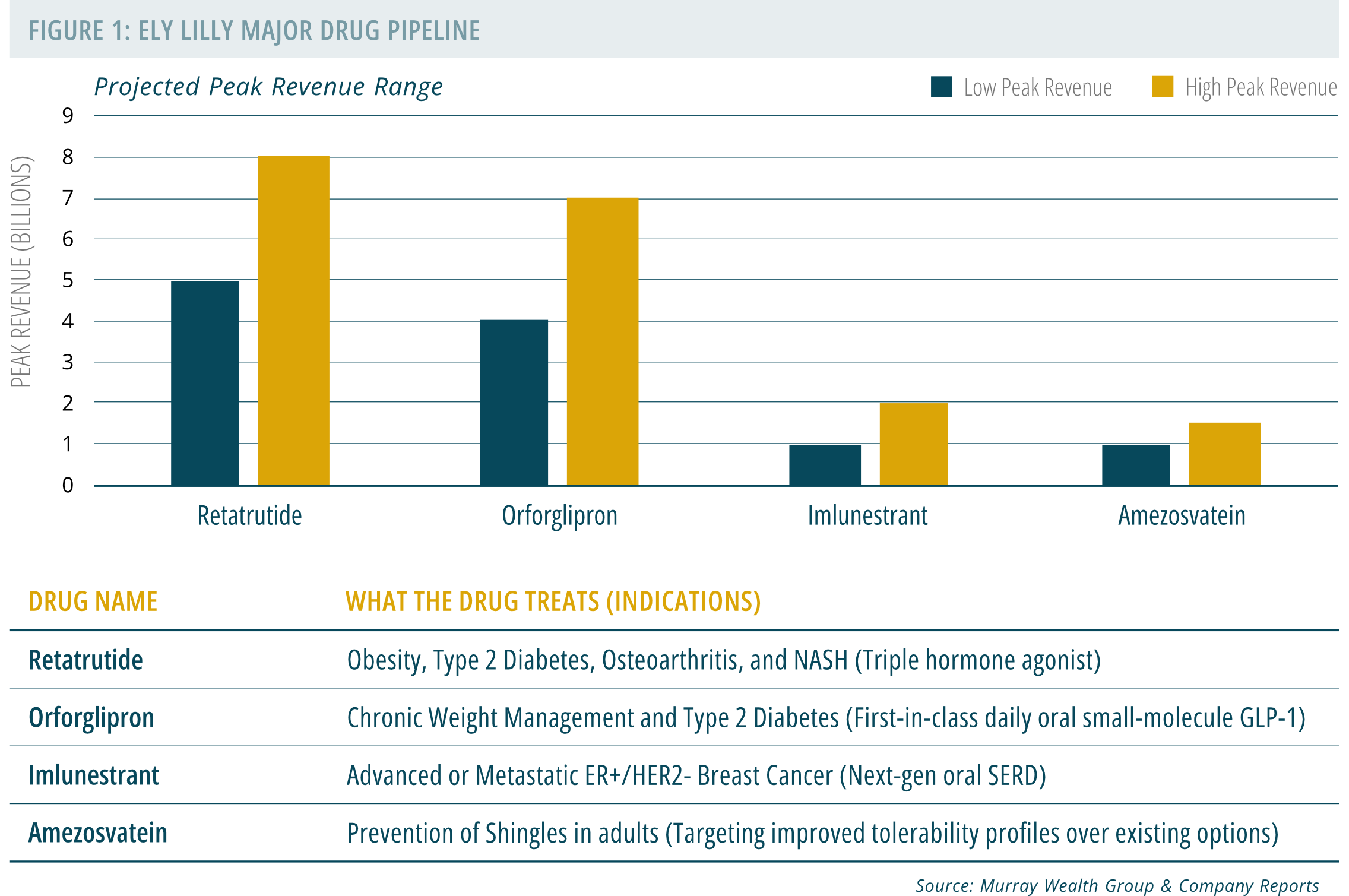
Successful pharmaceutical investing is rarely about identifying a single breakthrough drug. More often, it is about finding companies that have demonstrated an ability to repeatedly develop, test, secure approval for and commercialize new therapies.
The Value of Intellectual Property
Patents remain one of the most powerful business models in the global economy. A successful drug can require more than a decade of research and billions of dollars in investment before reaching patients. The reward for taking that risk is a period of market exclusivity that can generate substantial cash flow.
AstraZeneca has demonstrated this formula for many years. It has been a core holding in our portfolios for nearly a decade and has delivered strong results through a diversified portfolio spanning oncology, cardiovascular disease and respiratory treatments.
The company currently has approximately 190 development programs underway. Recent FDA approvals for expanded uses of Enhertu, its leading cancer therapy, illustrate how existing assets can continue generating value long after their initial launch. The depth of AstraZeneca’s research pipeline remains one of its greatest strengths.
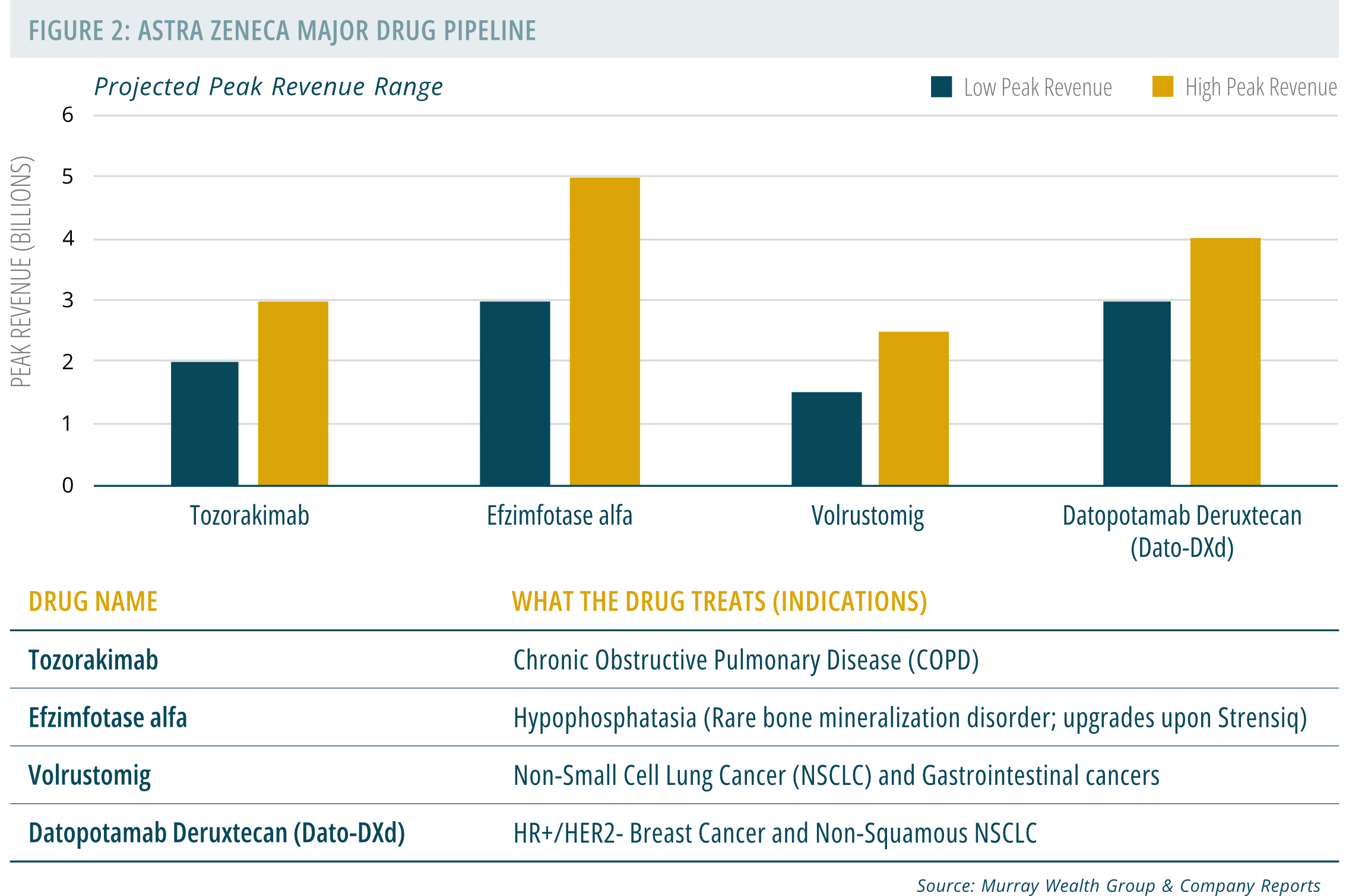
At approximately 28 times earnings, investors are paying for future success. The company will need to continue delivering new therapies and expanding existing franchises to justify that valuation.
Looking Beyond Today’s Headlines
Pfizer presents a different opportunity. Investor sentiment remains heavily influenced by declining COVID-related revenues and upcoming patent expirations. As a result, the market has largely overlooked management’s expectation that the business can return to meaningful earnings growth through the latter part of the decade.
We think that skepticism may be excessive. Pfizer continues to invest heavily in research and development while pursuing significant cost reductions across the organization. The company also maintains a solid balance sheet and offers a dividend yield well above that of the broader market.
Its future will depend less on pandemic revenues and more on the success of its next generation of therapies.
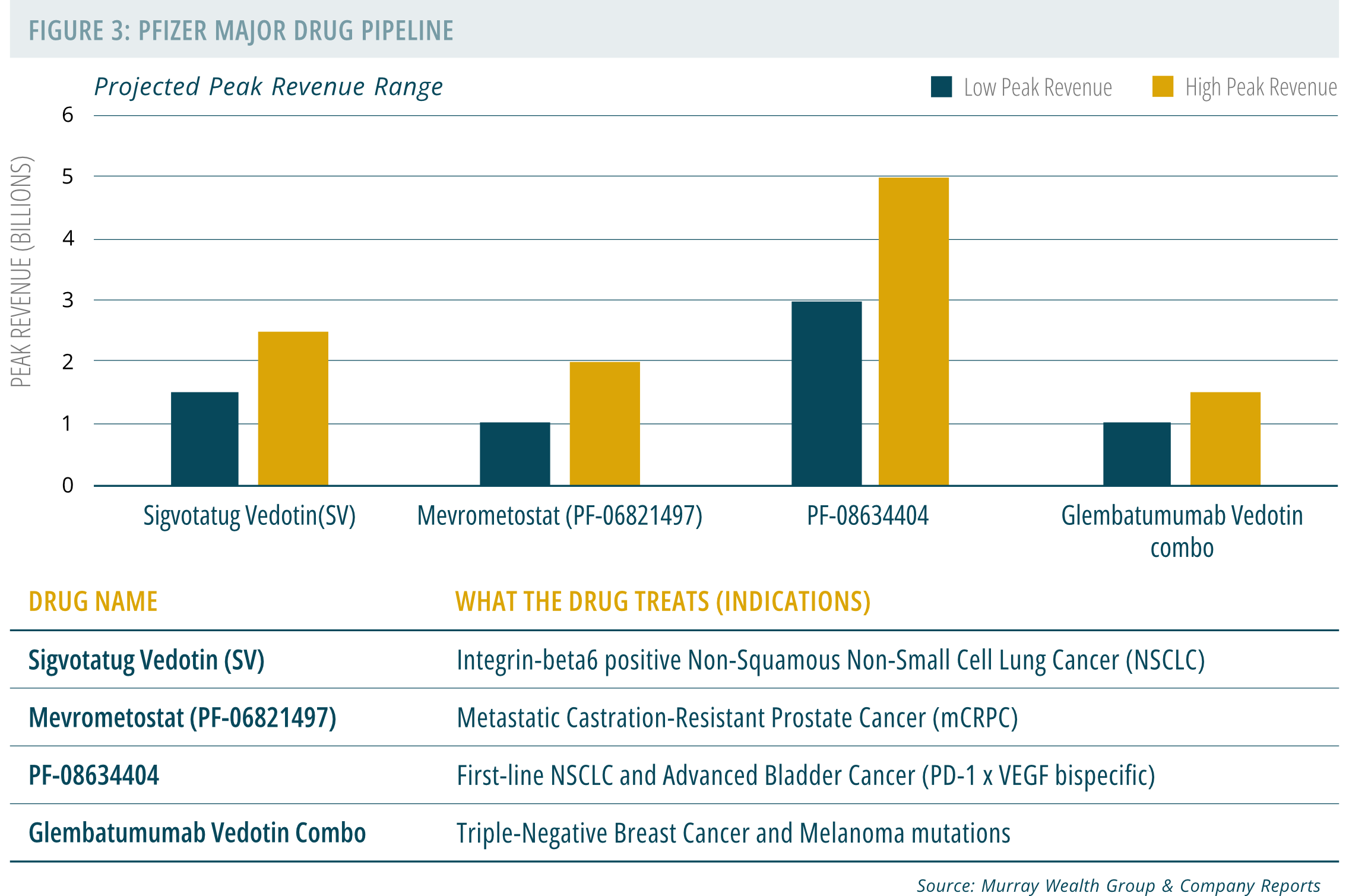
For income-oriented investors, the combination of dividend income and potential earnings recovery presents an attractive risk-reward profile.
Our Perspective
Short-term market movements are often driven by politics, interest rates and investor sentiment. Long-term wealth creation is driven by earnings growth, innovation and sound capital allocation. The pharmaceutical sector sits at the intersection of several powerful trends: an aging population, increasing demand for advanced therapies and continued scientific innovation. Companies that successfully develop and commercialize new treatments can create significant value for both patients and shareholders.
Our investment process is built on identifying durable businesses with strong competitive positions, capable management teams and the ability to compound earnings over time. The pharmaceutical sector continues to offer several companies that meet those criteria.
While individual holdings will evolve as valuations and opportunities change, the need for better treatments, longer lives and improved health outcomes is unlikely to diminish. We expect the companies leading those advances to remain an important source of opportunity for investors in the years ahead.